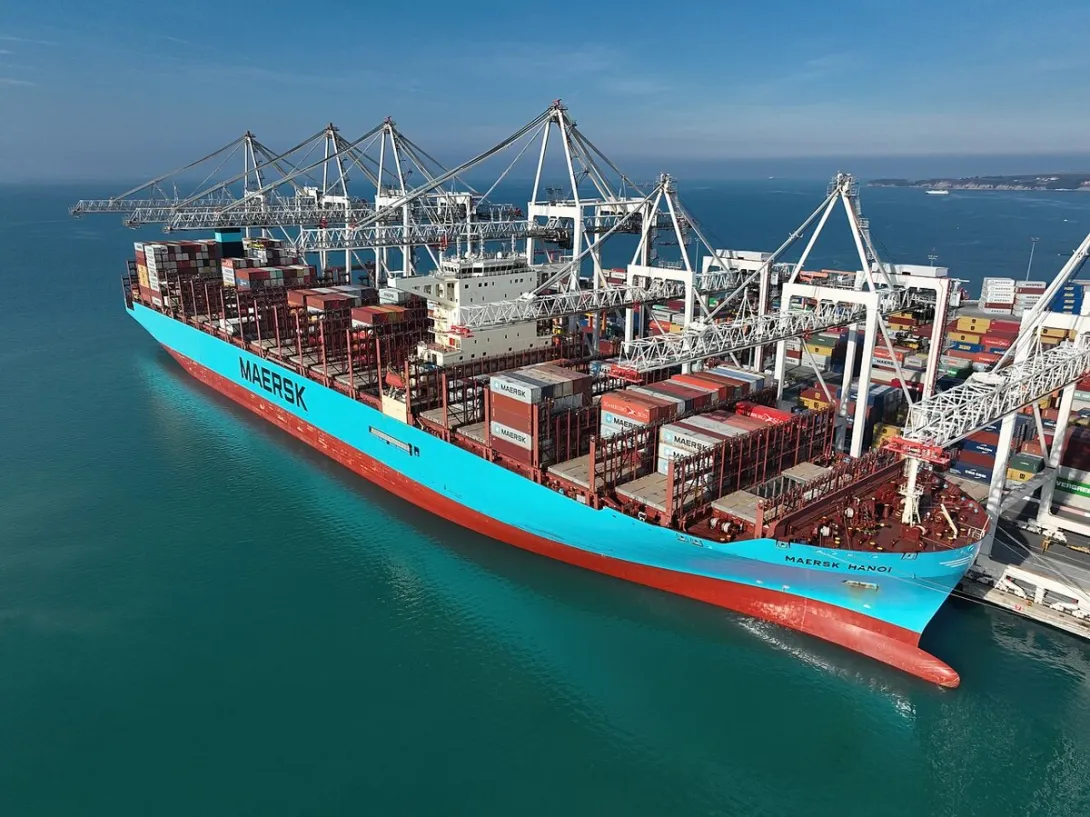
A.P. Moller-Maersk confirmed on November 11 that an attacker gained unauthorised access to one of its local legacy systems and extracted data from it. The system came to Maersk through a previous acquisition, a detail that puts the incident squarely in a familiar enterprise risk category: systems inherited in a deal that may not have received the same scrutiny, patching, or monitoring as the core estate.
Maersk said its cyber security team launched a full investigation as soon as the issue was discovered, took swift action to secure the affected system, and that the investigation remains ongoing. Its central assurance is about containment. The company said its findings so far strongly suggest no sensitive data has been disclosed, that the incident is isolated to the local system, and that it has found no indication of impact on other Maersk systems or on customer and partner systems that connect through integrations such as APIs and EDI. It said it does not anticipate disruption for customers, who can continue to book and manage shipments as usual.
The disclosure followed a public extortion claim. BleepingComputer reported that the WhiteArmor ransomware group listed Maersk on its data leak site over the weekend, demanded 5 million dollars in bitcoin within 30 days, and claimed to hold about 100 GB of data taken from the OCF and LF Logistics platform. Maersk acquired LF Logistics, the platform's original developer, from the Li and Fung Group in 2022. Those volume, ransom, and contents claims come from the group itself. Maersk's own notice did not name the affected system, the types of data taken, or when the intrusion occurred, and it did not confirm the group's claims.
That distinction matters. Maersk has confirmed access and extraction, while saying current evidence suggests no sensitive data has been disclosed. It has promised to keep customers updated and to inform impacted parties if later findings require it. It also warned customers to treat unexpected communications claiming to relate to the incident with caution and to verify them through their usual Maersk contact, a standard precaution when an extortion group is publicly discussing stolen material.
For enterprise IT teams, the lesson is less about shipping than about acquisition hygiene. A legacy platform that supports warehousing, fulfilment, and supply chain operations can hold operational data from many other companies, even when it sits outside the buyer's main systems. An inventory that stops at headline applications misses exactly this kind of local system, and an isolated incident can still become a multi-party notification problem if the data belongs to customers and partners.
The stakes are amplified by Maersk's scale. The Danish group is one of the world's largest container carriers, and BleepingComputer notes it operates across 130 countries. The company also carries institutional memory of a far larger incident: in 2017, NotPetya forced Maersk to rebuild thousands of servers and tens of thousands of workstations and caused damages of up to 300 million dollars. Nothing in the current disclosure suggests an event of that scale, and Maersk's message is that core operations were not affected. The next updates, on what was taken and whose data it was, will determine how far this incident travels.