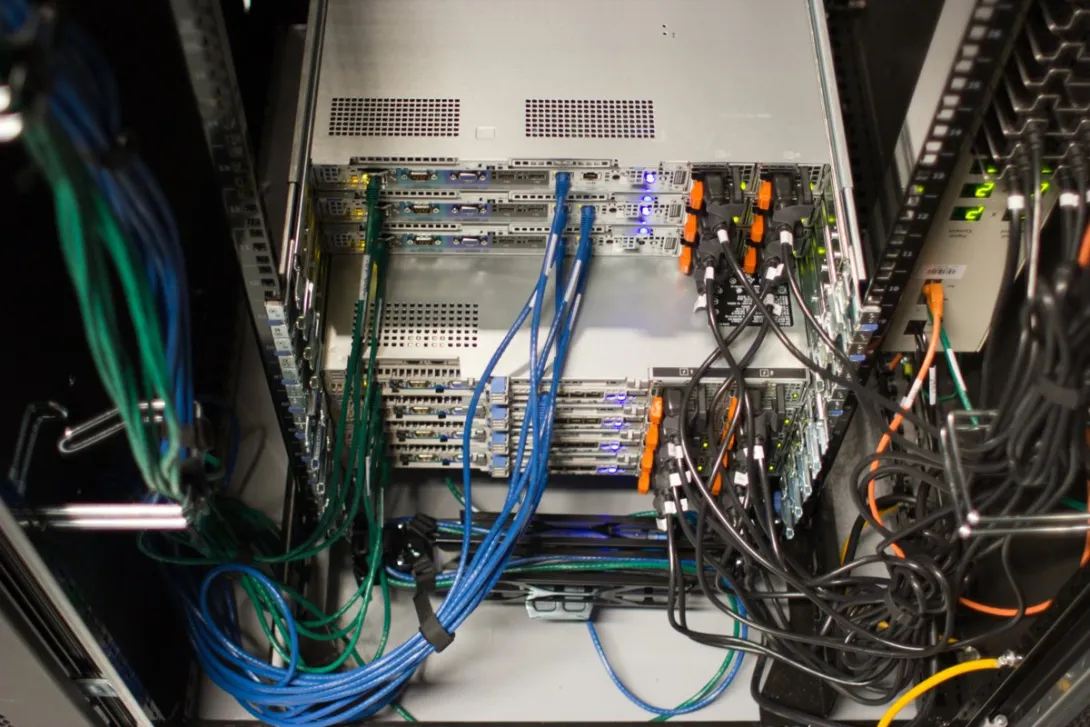
Global spending on data centers is expected to reach 1 trillion dollars in 2026 and more than double to 2.1 trillion dollars by 2028, according to a BofA Global Research note published on Friday and reported by Reuters. The forecast is the latest sign that demand for artificial intelligence services is turning data center construction into one of the largest capital spending programs in the technology industry.
The longer view is just as steep. BofA said the data center market, worth 275 billion dollars in 2022, could reach 2.93 trillion dollars by 2030, with AI driving a 37 percent compound annual growth rate across the market from 2025 to 2030. Chipmakers and server developers, particularly in the United States, have been among the biggest beneficiaries of the buildout so far.
The most useful part of the note for enterprise IT planners is its breakdown of where the money actually goes. BofA put the cost of building data center capacity at 49 million dollars per megawatt, and said IT-related expenses make up 78 percent of that total. In other words, a modern AI data center is mostly a computing purchase wrapped in a building, not the other way around.
Servers are by far the costliest component, at an estimated 31.4 million dollars per megawatt — roughly two-thirds of the entire per-megawatt bill. Networking is the second-largest line item at 4.8 million dollars per megawatt, a reminder that AI clusters live or die on the fabric connecting thousands of accelerators, not just on the accelerators themselves. Everything else is comparatively small: switchgear, power distribution, generators, backup power, chillers and cooling each cost between 100,000 dollars and 1.1 million dollars per megawatt, BofA estimated.
AI-focused facilities run even pricier. So-called neoclouds — data centers built specifically for AI workloads — cost about 57 million dollars per megawatt, BofA said, although they benefit from lower space requirements than traditional counterparts because so much of their capacity is concentrated in dense, high-power racks.
The spending wave is also spreading well beyond the chip and server vendors. Data center construction has become a fast-growing source of revenue for the industrial firms that make generators, construction equipment, switchgear and chillers — the unglamorous hardware without which no AI cluster can be powered or cooled. Those suppliers capture a smaller slice of each project than the IT vendors do, but the sheer volume of construction is turning that slice into a significant business.
For enterprise buyers, the practical takeaway is about capacity and lead times. When most of the money in every new megawatt flows to servers, accelerators and networking gear, demand pressure shows up first in component availability and pricing for everyone else — including companies simply trying to refresh their own server rooms or expand a private cloud. A market growing at a 37 percent annual pace through 2030 means IT teams should expect competition for the same hardware the hyperscalers and neoclouds are buying in bulk, and plan procurement cycles accordingly.
BofA's figures are estimates in an analyst note, not audited results, and forecasts this large have a way of moving as interest rates, power availability and AI demand shift. But the direction is consistent with what server makers, chip firms and industrial suppliers are already reporting: the AI buildout is not a niche cloud story anymore. At a trillion dollars a year and climbing, it is becoming the central fact of enterprise infrastructure spending.