Dell Technologies has posted the kind of quarter that rewrites what the company is. Reporting fiscal third-quarter 2027 results on November 24, Dell said revenue reached a record 54.9 billion dollars, up 103 percent year over year, for the quarter ended October 30, 2026. The engine was not personal computers. It was the Infrastructure Solutions Group, and above all the AI-optimized servers that data center operators are buying as fast as vendors can build them.
AI-optimized server revenue alone came to 22.0 billion dollars in the quarter, up 291 percent from 5.6 billion dollars a year earlier. Dell booked 60.2 billion dollars in new AI orders during the quarter, ending the period with a record AI backlog of 132.3 billion dollars. Vice Chairman and Chief Operating Officer Jeff Clarke said each order was vetted for customer quality and access to capital, land and power, and that more than 7,500 customers are now deploying what the company calls Dell AI Factories. Clarke noted that Dell tests each complete rack before it ships and stands it up within six hours of delivery, shortening what he called time-to-first-token for customers.
The rest of the infrastructure business grew sharply as well. Traditional servers and networking revenue hit a record 15.0 billion dollars, up 235 percent, and storage revenue reached 4.9 billion dollars, up 24 percent. Total Infrastructure Solutions Group revenue was 42.0 billion dollars, up 198 percent, with segment operating income of 7.1 billion dollars, up 308 percent. Clarke put the shift plainly: Dell is now a different company, with the infrastructure group driving the vast majority of its profit and growth.
The personal computer business, by contrast, looked like a mature business attached to a rocket. Client Solutions Group revenue was 12.9 billion dollars, up just 3 percent, with commercial sales of 11.3 billion dollars partly offset by a 15 percent decline in consumer revenue to 1.6 billion dollars. Segment operating income fell 6 percent to 704 million dollars.
Profitability held up even as lower-margin AI hardware became a larger share of sales. Diluted earnings per share were 8.82 dollars, up 287 percent, and non-GAAP diluted earnings per share were a record 9.45 dollars, up 265 percent. Net income reached 5.7 billion dollars, cash flow from operations was 4.5 billion dollars, and Dell returned a record 4.9 billion dollars to shareholders through buybacks and dividends. Chief Financial Officer David Kennedy said non-GAAP operating expenses fell to 7 percent of revenue, the lowest level in the company's 42-year history, and the board approved a further 25 billion dollar increase to the share repurchase authorization.
Dell raised its outlook again. It expects fourth-quarter revenue of about 56.3 billion dollars, up 69 percent, and lifted full-year fiscal 2027 revenue guidance from 192 billion dollars to 202 billion dollars, up 78 percent. Full-year AI-optimized server revenue is now expected to reach 78 billion dollars, up from a previous forecast of 74 billion dollars.
The open question is conversion, not demand. A 132.3 billion dollar backlog is a promise, not installed computing power, and turning orders into recognized revenue depends on customers securing power, facilities and financing, and on Dell's supply chain keeping pace. For now, though, the numbers settle one argument: the AI buildout's spending is broadening well beyond chipmakers, and the server vendors assembling the racks are collecting a very large share of it.
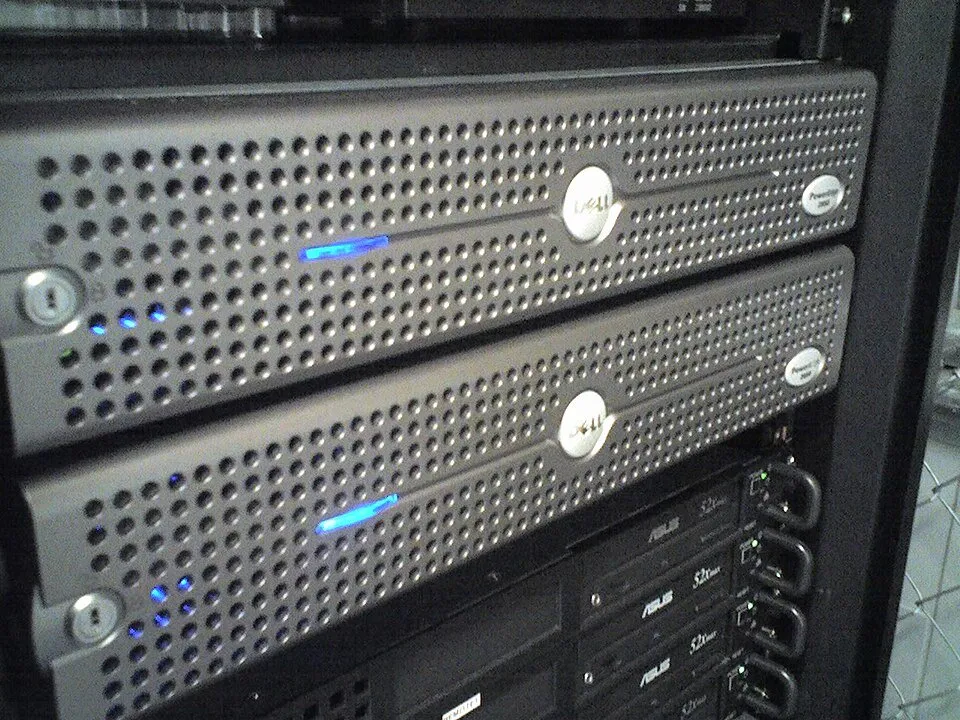
Photo: Dell PowerEdge servers, photograph by Dsv via Wikimedia Commons, public domain.