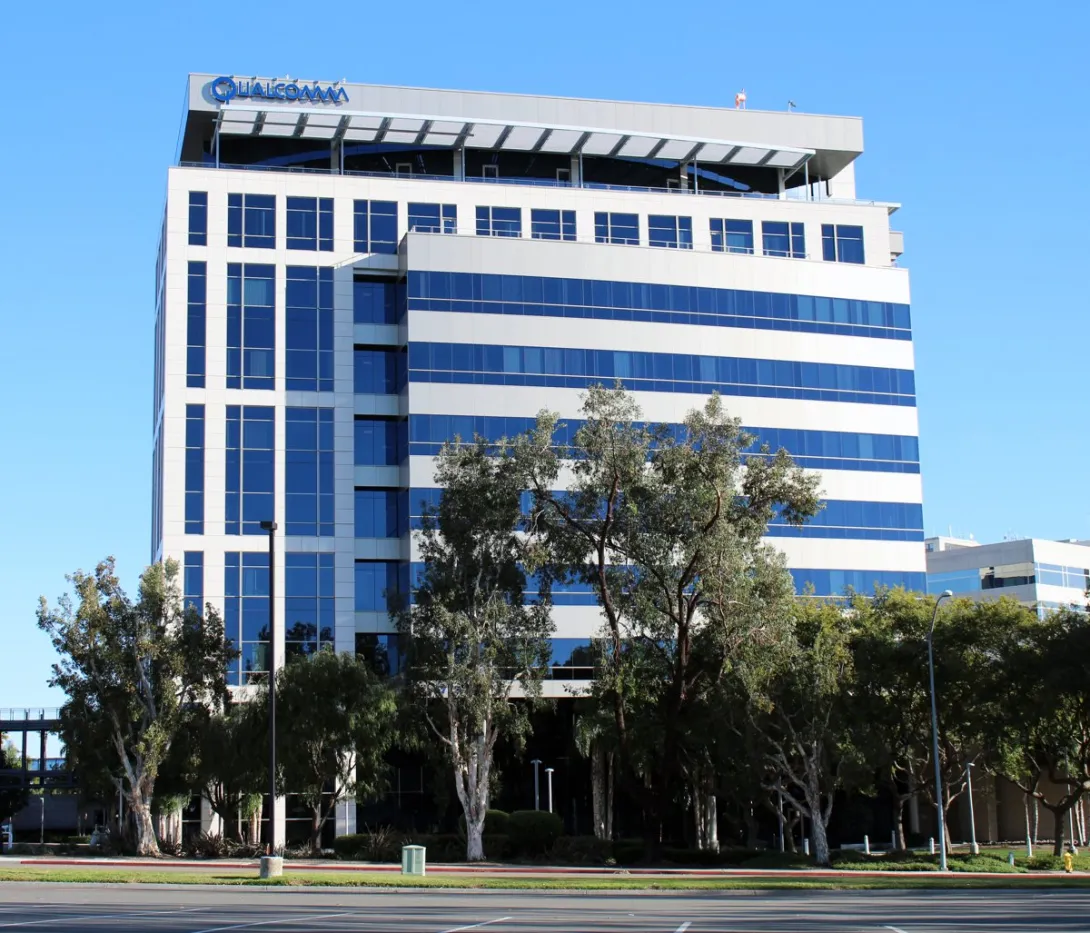
Qualcomm reported fiscal fourth-quarter results on November 4 that captured a company in transition, as a sharp fall in smartphone chip sales contrasted with rapid growth in automotive and a new data center business that management expects to become a major revenue source in fiscal 2027.
The chipmaker reported non-GAAP revenue of 10.44 billion dollars, down 7 percent from a year earlier, and non-GAAP earnings of 2.17 dollars per share, just ahead of analyst expectations of 2.16 dollars. GAAP revenue was 10.32 billion dollars, down 8 percent. Shares fell more than 6 percent in extended trading, according to Reuters, as investors focused on the handset miss and a first-quarter earnings outlook whose midpoint came in slightly below consensus.
Revenue from handsets, Qualcomm's largest business, fell 26 percent to 5.14 billion dollars, dragging revenue at its QCT chip segment down 8 percent to 9.02 billion dollars. The weakness reflected a difficult smartphone market rather than a single customer problem. Counterpoint Research said global smartphone shipments fell 20 percent in the September quarter to a 14-year low, as surging memory chip costs, driven by booming demand from AI data centers, pushed up device prices and weighed on demand.
In an interview with Reuters, chief executive Cristiano Amon said sales of Android handsets had bottomed out and were ticking upward again. He also said the fiscal first-quarter forecast includes no further sales from Apple, whose modem business Qualcomm has been losing, while the company wins deals with other customers beyond smartphones. Amon framed the near-term constraint as supply rather than demand.
The other side of the results was considerably stronger. Automotive revenue surged 89 percent to 1.99 billion dollars, approaching 2 billion dollars in a quarter for the first time, while Internet of Things revenue rose 4 percent to 1.888 billion dollars. Licensing revenue at the QTL segment fell 7 percent to 1.304 billion dollars. Together, the non-handset gains offset only part of the handset decline, but management argued that the mix is shifting quickly.
Data centers are central to that argument. Qualcomm said it booked about 650 million dollars in data center revenue in the quarter, mostly from custom chip solutions and connectivity work, and expects another 650 million dollars in the fiscal first quarter, above analyst expectations of 539.1 million dollars cited by Reuters from Visible Alpha. Amon reiterated a target of 5 billion dollars in data center revenue in fiscal 2027, with the business expected to exit that year at a 7 billion dollar annualized rate.
In the earnings release, Amon said fiscal 2027 marks the start of the company's non-handset revenue inflection, including the ramp of its data center business, and projected non-handset revenue growth of more than 60 percent year over year. For the fiscal first quarter, Qualcomm guided revenue to between 10.4 billion and 11.2 billion dollars and non-GAAP earnings to between 2.15 and 2.35 dollars per share.
For enterprise and infrastructure readers, the story is the feedback loop now running through the chip industry. AI data center demand is lifting memory prices and squeezing the smartphone market that has long funded Qualcomm, even as that same data center market offers the company its largest new growth opportunity. Whether Qualcomm can scale custom silicon and connectivity sales fast enough to replace handset dollars will decide how convincing its diversification story looks a year from now.