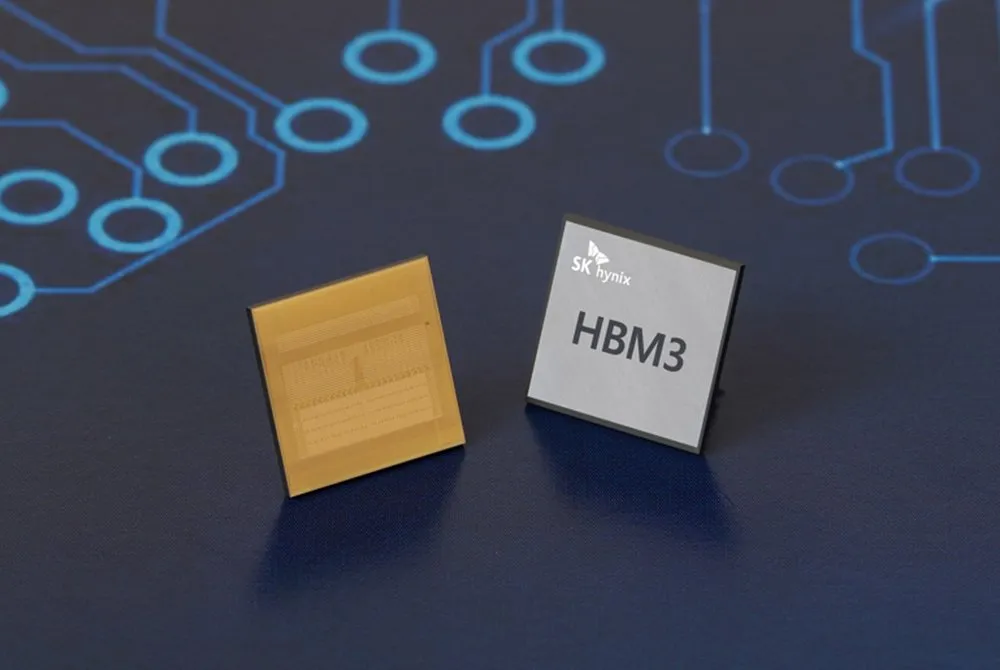
SK Hynix reported the strongest quarter in its history on Wednesday, becoming the first memory maker to pass 100 trillion won in quarterly revenue as artificial intelligence data centers absorb every high-bandwidth memory chip it can produce. The South Korean company, a key supplier to Nvidia, said third-quarter revenue rose 328 percent from a year earlier to 104.6 trillion won, while operating profit jumped more than seven-fold to a record 83.3 trillion won.
Both figures comfortably beat analyst expectations. Operating profit came in ahead of the 76.7 trillion won LSEG SmartEstimate, and net profit reached 39.8 trillion won. The operating margin climbed to a record 79.7 percent, up from 76.3 percent in the second quarter and about 72 percent in the first, a level of profitability almost unheard of in the historically cyclical memory business.
The driver is pricing power born of scarcity. Average selling prices for DRAM rose by a high-20s percentage from the previous quarter, NAND flash prices rose by a mid-20s percentage, and shipments of server DDR5 and advanced high-bandwidth memory kept climbing. "Despite unfavorable currency effects, both operating profit and the operating margin set record quarterly highs, driven by higher product prices and expanded sales centered on high-value products," Chief Financial Officer Kim Woo-hyun said.
SK Hynix expects its newest HBM4 products to overtake HBM3E in both shipments and revenue during the fourth quarter. More striking is how far forward the order book stretches. Park Jun-deok, the vice president in charge of DRAM marketing, said that over the next three years through 2029, virtually all of the company's DRAM and high-bandwidth memory volumes are effectively sold out, and long-term agreements already cover more than half of its expected 2027 and 2028 production. The company also warned that memory supply will remain short through 2030, citing the technical difficulty of leading-edge processes and the long lead times needed to build new fabrication plants.
President and CEO Kwak Noh-jung pointed to what the company calls a virtuous cycle: AI-driven productivity gains encourage wider AI adoption, which in turn drives more infrastructure investment. SK Hynix also expects physical AI applications such as autonomous driving and robotics to add another layer of memory demand on top of data center orders.
The windfall is large enough that the company is returning much of it to shareholders while it lasts. SK Hynix said it will pursue shareholder returns totaling about 100 trillion won this year, roughly 75 billion dollars, combining 30 trillion won in cash dividends with 60 trillion won in share repurchases and cancellations, including a 40 trillion won buyback announced in August. The company's shares rose sharply in Wednesday trading after the results.
For enterprise buyers, the message is uncomfortable but clear: the memory that AI servers depend on is committed years in advance, prices are still rising, and relief is not scheduled until the next decade. Procurement teams planning server refreshes or AI clusters should expect memory to remain the constraint, and the line item, that shapes their budgets through 2029 and beyond.