South Korea's exports nearly doubled in October, rising 93.7 percent from a year earlier to 115.28 billion dollars, according to trade data released on Sunday, November 1 by the Ministry of Trade, Industry and Resources and reported by Reuters. It was the strongest monthly growth since January 1974, it beat September's 83.7 percent gain, and it came in slightly above the 93.2 percent median forecast in a Reuters poll of economists.
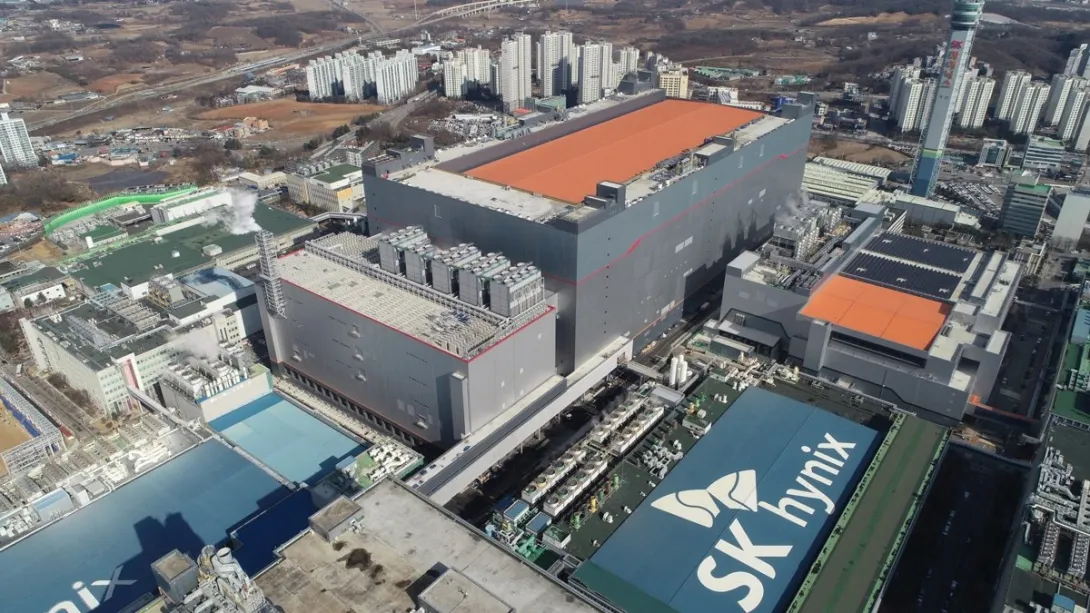
Semiconductors did the heavy lifting. Chip exports jumped 259.4 percent to 56.44 billion dollars, which means nearly half of everything South Korea sold abroad in October was a chip. The ministry said prices and volumes both stayed high as global technology companies kept investing in facilities to compete for leadership in artificial intelligence. South Korea is home to Samsung Electronics and SK hynix, the world's two largest memory makers, whose high-bandwidth memory and DRAM sit inside the AI servers filling data centers worldwide.
The AI build-out showed up across the rest of the export ledger too. Computer exports, mainly servers and solid-state drives for AI services, surged 496.6 percent to about 5.9 billion dollars. Electrical equipment, including the transformers, wire and cable that feed power into AI data centers, set an all-time monthly record. Demand was broad by destination as well: shipments to the United States grew 185.8 percent to 24.9 billion dollars, exports to China rose 133.6 percent, and sales to Southeast Asia climbed 128.0 percent, with Europe up 56.4 percent.
Two qualifications sit behind the headline. First, October was not quite a record month: September's total was higher, at 121.1 billion dollars, with 60.3 billion dollars in chips, making October the second-biggest month on record and the second straight month above 110 billion dollars. Second, the calendar helped. The Chuseok harvest holiday fell in October last year but in September this year, so October 2026 had more working days than the month it is compared against. Even after adjusting for that, the ministry put average daily exports up about 76 percent, to 5.24 billion dollars, which is still extraordinary growth by any measure.
Imports rose 36.0 percent to 72.78 billion dollars, the biggest annual increase since January 2022, driven by higher crude oil prices and by demand for semiconductor manufacturing equipment and automobiles. South Korea still posted a trade surplus of 42.50 billion dollars for the month, narrower than September's record 49.97 billion dollars.
The cumulative picture points at a milestone arriving within weeks. Exports for January through October totaled 930 billion dollars, and Trade Minister Kim Jung-kwan said it is becoming certain that annual exports of 1 trillion dollars will be reached within November. That would make South Korea only the fourth country in the world to cross the mark, after the United States, China and Germany. The export surge is already feeding the wider economy: gross domestic product grew faster than expected in the third quarter on strong semiconductor exports and investment, and both Samsung Electronics and SK hynix have posted surging profits. For the global tech industry, the trade data is a customs-stamped confirmation that hyperscaler spending on AI infrastructure is not slowing, and that memory supply, and the pricing power that comes with it, remains concentrated in South Korea.