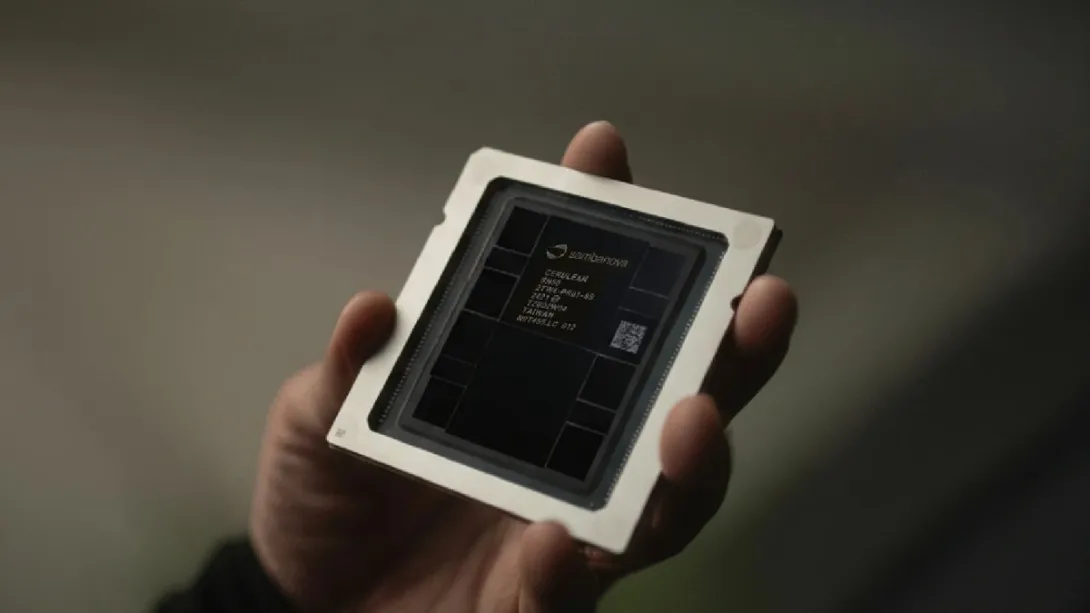
SambaNova announced on Tuesday, November 3, that Supermicro is entering into a strategic collaboration to build and sell artificial intelligence inference systems powered in part by SambaNova chips. The initial plan covers 10,000 SN50 Reconfigurable Dataflow Unit chips, and the systems will combine those RDUs with Nvidia graphics processing units in a disaggregated design. Supermicro will develop the SN50 inference racks as part of its Data Center Building Block Solutions portfolio, giving customers a way to order the specialized chips alongside the GPUs they already buy through a familiar server supplier.
The design rests on a simple division of labor inside large language model inference. In the prefill phase, the system reads and processes the prompt, and that work is compute-bound, which is where Nvidia GPUs excel. In the decode phase, the system generates the response one token at a time, and that work is memory-bound, which is the task SambaNova built the SN50 to handle. By assigning each phase to the hardware suited to it, the companies say a combined system can deliver faster and more efficient inference than either type of hardware would deliver on its own.
The SN50 is SambaNova's fifth-generation RDU, purpose-built for high-performance inference. According to the company, RDUs can serve the largest models at high speed and high throughput without requiring extreme rack power density. That point matters for operators that want more inference capacity but cannot wait for a new facility, because power and cooling constraints now govern how quickly data centers can expand. A rack that fits into an existing building, and that extends the useful life of GPUs an operator already owns, offers a practical route to additional capacity.
Supermicro will handle most of the work of getting the systems to customers. It will integrate, test, deliver, and support them, including providing on-site service. SambaNova engineers will work alongside Supermicro on deployments, getting models running on the SN50 and tuning them for performance. The rollout will begin with NeoClouds and sovereign clouds, and it will then expand to enterprises that run artificial intelligence workloads in their own data centers.
Both chief executives framed the deal around agentic artificial intelligence. Charles Liang, president and chief executive of Supermicro, said the collaboration expands the company's portfolio by enabling heterogeneous architectures that integrate GPU computing with specialized inference acceleration. Rodrigo Liang, co-founder and chief executive of SambaNova, said agentic artificial intelligence is the next wave of inference and has to run everywhere, and he noted that customers can now order SN50 RDUs alongside GPUs from a partner they already trust.
The announcement did not disclose pricing, revenue expectations, or a delivery schedule for the 10,000 chips. The companies did say they expect the partnership to deliver substantially more high-performance inference capacity in 2027 than would otherwise be possible. For enterprise buyers, the significance is less any single specification than the direction of travel: inference is becoming a distinct infrastructure market, and server makers are increasingly willing to mix accelerators from different vendors in one supported system rather than build every rack around a single chip.